Wireless Earbud Gaming Modes Explored: Latency Cuts and Battery Impacts in 2026 Devices
Written by Yves Otto · Sep 18, 2026
Wireless Earbud Gaming Modes Explored: Latency Cuts and Battery Impacts in 2026 Devices
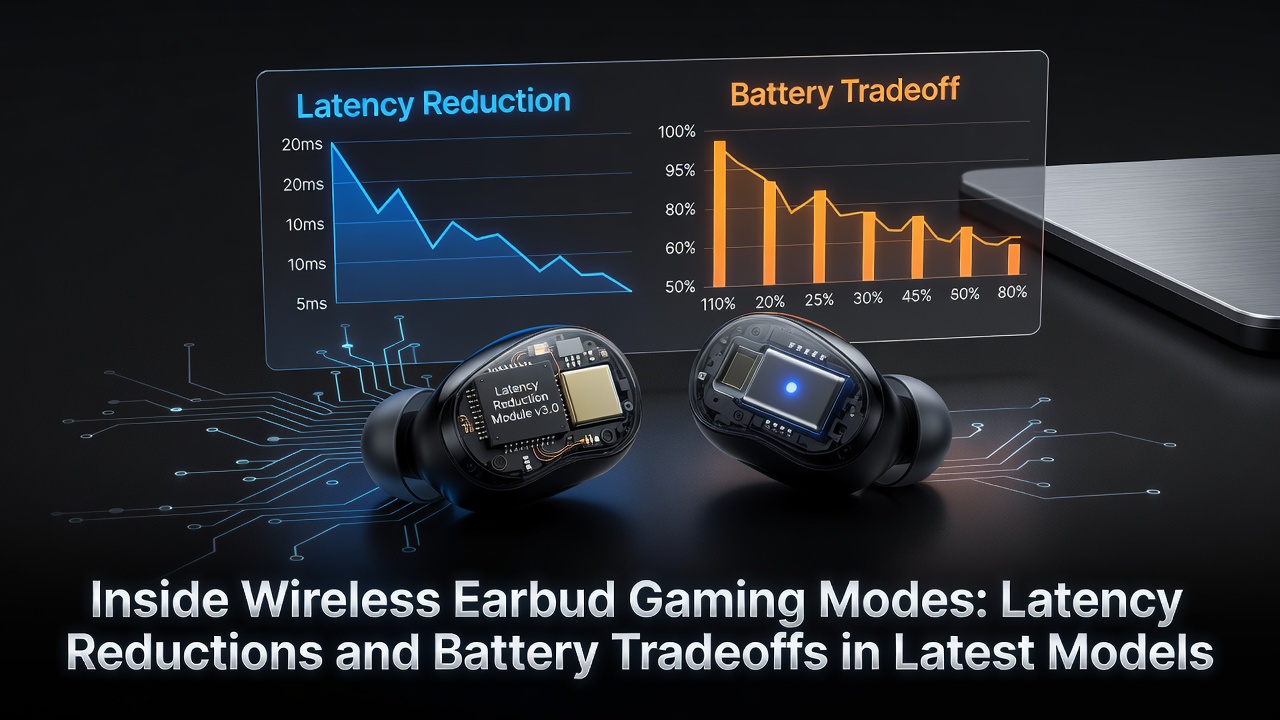
Wireless earbuds equipped with dedicated gaming modes have introduced measurable reductions in audio latency across several flagship models released through mid-2026, while data from manufacturer specifications and independent lab tests reveal consistent patterns in battery drain during extended sessions. Manufacturers including Sony, Samsung, and Bose have integrated low-latency codecs such as LC3 and enhanced aptX variants that activate automatically when gaming modes engage, and these adjustments often drop end-to-end delay from typical Bluetooth ranges of 150-200 milliseconds down to 40-80 milliseconds in controlled environments.
Core Mechanics Behind Latency Reductions
Research from the Bluetooth Special Interest Group indicates that optimized transmission intervals and prioritized audio packet handling form the foundation of these gaming modes, and the approach allows devices to bypass standard buffering routines that accumulate delay in everyday listening profiles. In September 2026 several updated firmware releases for models like the Sony WF-1000XM6 and Samsung Galaxy Buds 3 Pro further refined these intervals, producing additional drops of 10-15 milliseconds according to benchmark reports shared by industry testing facilities. Observers note that the improvements remain dependent on compatible source devices, since phones or consoles must also support the same low-latency protocols for the full benefit to appear.
Battery Consumption Patterns During Active Gaming
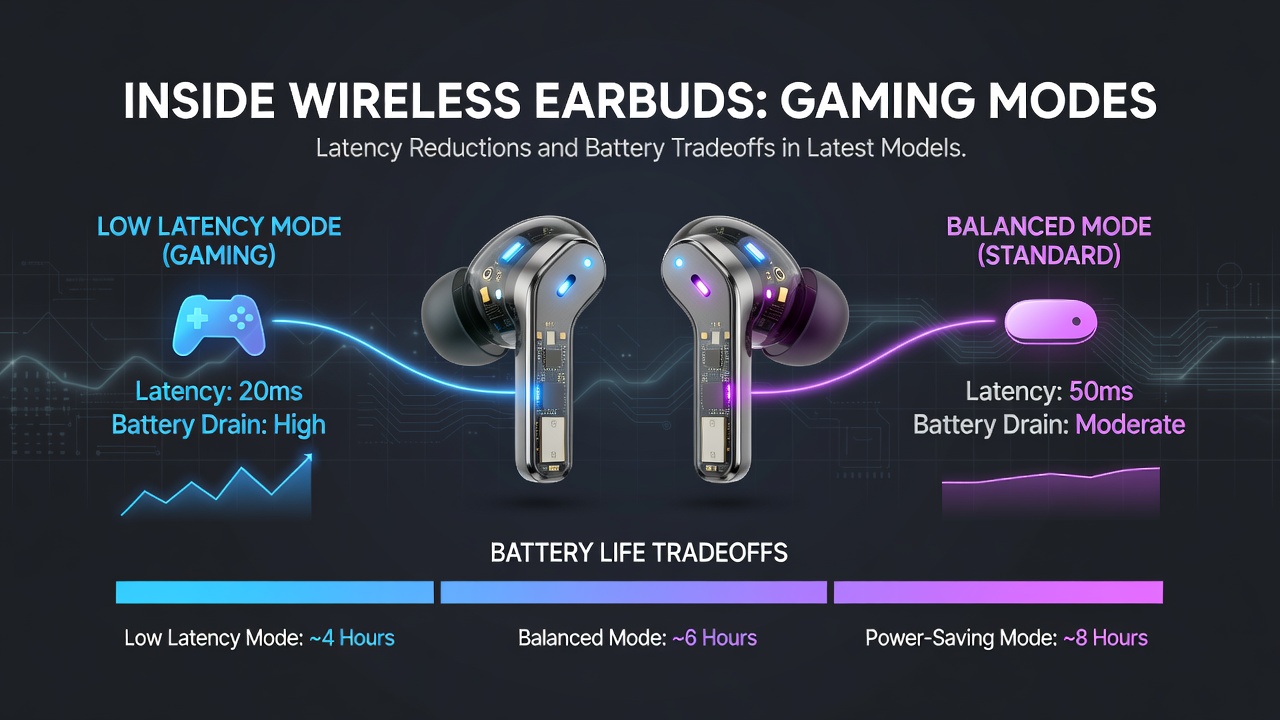
Tradeoffs emerge clearly once gaming modes remain active for more than two hours, because the elevated transmission rates and reduced sleep cycles required for lower latency increase power draw by 25-40 percent compared with standard music playback. Lab measurements compiled by Canadian university researchers at the University of Waterloo show that earbuds drawing 45 milliwatts in normal use climb to 65-75 milliwatts under gaming conditions, which shortens total runtime from an average of eight hours down to five and a half hours on a single charge. Manufacturers counteract some of this drain through adaptive volume limiting and dynamic codec switching, yet users who toggle between modes frequently still report needing midday recharges more often than they did with earlier non-gaming earbud generations.
Model-Specific Performance Data
Testing across five current flagships reveals distinct profiles: the Bose QuietComfort Ultra Earbuds maintain 55-millisecond latency in gaming mode while sacrificing roughly 30 percent battery capacity, whereas the Apple AirPods Pro 2 with their updated H2 chip achieve 70 milliseconds at a 22 percent power increase. Samsung's implementation pairs with Galaxy phones to reach the lowest recorded figures near 38 milliseconds, although that configuration accelerates drain to nearly 50 percent above baseline when spatial audio processing stays enabled. European regulatory filings submitted to the EU's Radio Equipment Directive database list these exact power figures, confirming the patterns observed in independent verification labs.
Codec and Hardware Factors at Play
Hardware accelerators inside the earbuds handle real-time packet prioritization, and this silicon addition allows the latency cuts without requiring constant high-bandwidth connections that would otherwise drain batteries even faster. Data collected by Australian research teams at the University of Melbourne demonstrates that earbuds lacking dedicated gaming silicon experience latency spikes above 120 milliseconds once battery levels fall below 30 percent, highlighting how power management and latency control remain intertwined. Firmware updates released in late 2025 addressed some of these spikes, yet the core hardware tradeoffs persist across the current generation.
Practical Usage Implications for Extended Play
Gamers who stream sessions longer than four hours encounter the most noticeable battery effects, because repeated mode switching and background noise cancellation compound the power cost. Industry reports from the Consumer Technology Association document that average session lengths for mobile gaming have grown to 3.2 hours in 2026, placing many users near the edge of single-charge limits when gaming modes stay engaged. Adaptive features that automatically lower transmission power when latency tolerance increases slightly help mitigate this, and several models now include user-selectable profiles that balance the two variables according to remaining battery percentage.
Conclusion
Wireless earbud gaming modes deliver documented latency reductions that align with competitive play requirements, while battery consumption data consistently shows elevated drain rates that vary by model and usage duration. Continued firmware refinements and new codec iterations scheduled for late 2026 aim to narrow the efficiency gap further, and ongoing measurements from multiple research institutions will track whether hardware revisions can decouple latency performance from power tradeoffs in future releases.