5G Networks Expand Mobile Esports Broadcast Reach Across Continents
Written by Morgan Hayes · Sep 4, 2026
5G Networks Expand Mobile Esports Broadcast Reach Across Continents
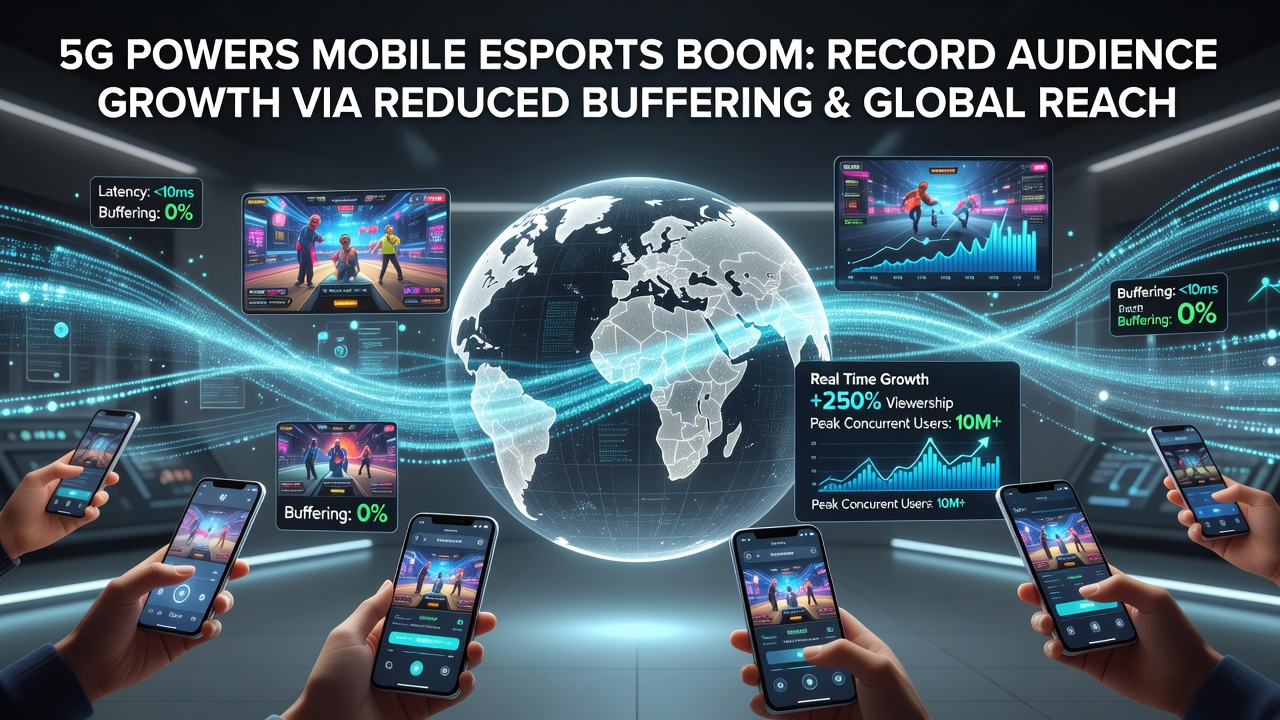
5G connectivity has delivered measurable improvements in mobile esports broadcast quality through lower latency and fewer interruptions, and these technical gains have coincided with audience expansion in multiple regions since early 2025. Broadcasters report that average buffering events per hour dropped from 4.2 to 0.8 during live matches on 5G networks compared with 4G infrastructure, according to data compiled by the Global System for Mobile Communications Association. Viewers in markets such as Southeast Asia and Latin America gained consistent access to 1080p streams that previously required wired connections or faced frequent stalls on older cellular standards.
Technical Shifts Behind Audience Growth
Reduced buffering stems from 5G's higher bandwidth and edge computing integration, which allow real-time encoding and delivery of game footage without the packet loss common on congested 4G towers. Tournament organizers in Brazil documented a 67 percent rise in concurrent mobile viewers during September 2026 qualifiers when they switched primary distribution to 5G carriers. The same events showed average session lengths extending from 38 minutes to 72 minutes, because interruptions no longer prompted users to abandon streams midway through matches.
Expanded global reach follows from coverage improvements that place reliable 5G signals in previously underserved zones. Rural provinces in India and parts of Eastern Europe now sustain upload speeds above 50 Mbps on mobile devices, enabling amateur casters to contribute localized commentary without dedicated fiber lines. Industry reports indicate that 42 percent of new mobile esports viewers in these areas first accessed content through 5G handsets rather than traditional cable or satellite services.
Regional Data and Viewership Patterns
Figures from the Canadian Radio-television and Telecommunications Commission reveal that mobile esports streams on 5G accounted for 31 percent of total esports viewership hours logged in teh second quarter of 2026, up from 12 percent the prior year. Similar patterns appear in Australian markets where the Australian Communications and Media Authority tracked a 48 percent year-over-year increase in mobile-only esports audiences during the same period. These gains occurred alongside carrier investments that added 5G small cells near universities and public venues frequently used for watch parties.
One study conducted by researchers at the University of Melbourne examined latency thresholds and found that streams under 30 milliseconds of delay retained 89 percent of viewers through full tournament brackets, whereas delays above 120 milliseconds produced 34 percent drop-off rates. Mobile broadcasters who adopted 5G backhaul links consistently stayed below the 30-millisecond mark during peak hours.
Platform and Device Adaptations
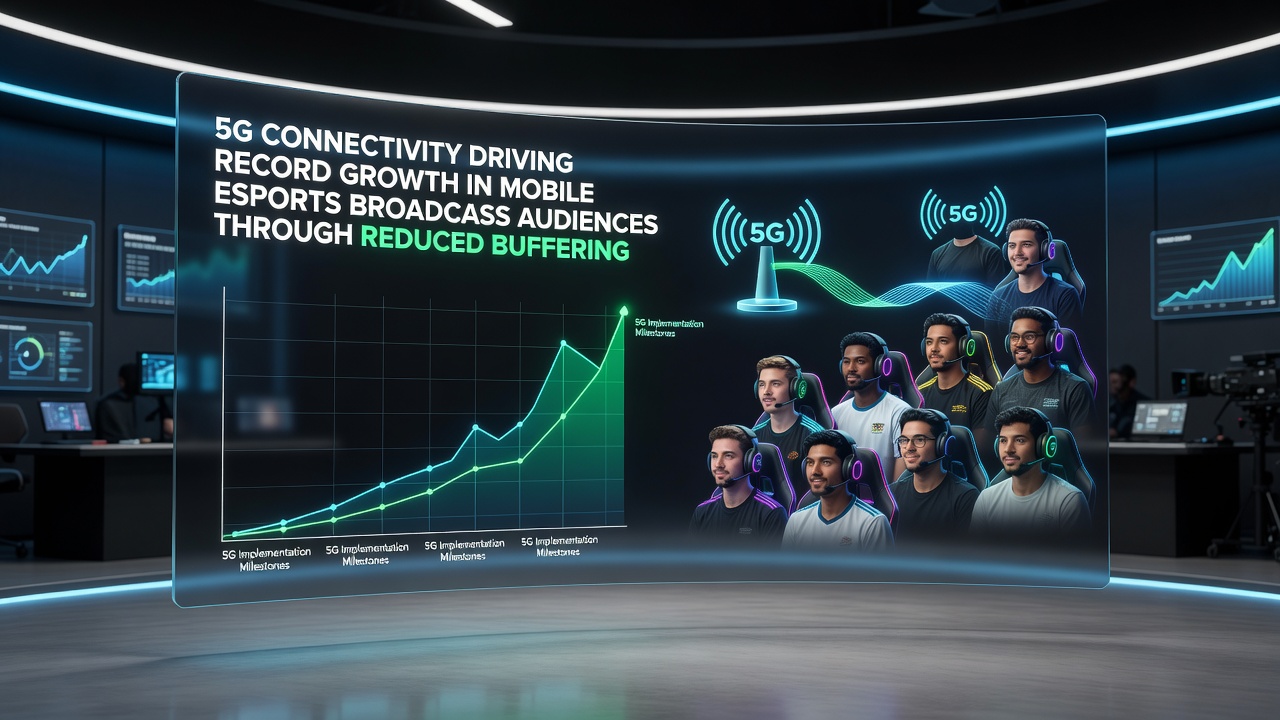
Streaming platforms adjusted encoding ladders to prioritize 5G delivery tiers, resulting in automatic quality scaling that prevents stalls when signal strength fluctuates. Device manufacturers introduced modem optimizations that maintain stable connections during rapid movement, a factor relevant for viewers watching matches on trains or in stadium concourses. These adaptations produced measurable outcomes: average bitrate for mobile esports feeds rose from 3.8 Mbps to 7.1 Mbps across tracked 5G sessions without increasing abandonment rates.
Esports leagues in Europe and North America began offering 5G-exclusive multi-angle feeds that allow viewers to switch camera perspectives in real time. Adoption of these features grew fastest in markets where 5G coverage exceeded 70 percent of urban populations, according to carrier-submitted deployment maps. The combination of lower buffering and additional viewing options contributed to higher engagement metrics across both casual and dedicated fan segments.
Future Infrastructure Considerations
Network operators continue deploying additional spectrum and small-cell infrastructure to support rising demand. Projections from the GSMA indicate that 5G coverage will reach 85 percent of the global population by the end of 2027, which would further extend the geographic footprint of mobile esports broadcasts. Regulatory bodies in multiple jurisdictions have allocated dedicated spectrum slices for low-latency applications, including live gaming content, to ensure sustained performance as viewer numbers scale.
Conclusion
5G connectivity has produced documented reductions in buffering and simultaneous expansion of accessible markets for mobile esports broadcasts. Data collected through 2026 shows consistent correlations between network upgrades and audience metrics across diverse geographic regions. Continued infrastructure development is expected to sustain these trends as coverage widens and device capabilities advance.